Stewardship is a high calling. It’s taking care of something – preserving and enhancing it. I believe the calling to be a steward of something is usually quite selfless and related to seeing an intrinsic worth in that thing. The concept of knowledge stewardship is, to my mind, just like that.
There are various skill or competency frameworks built around a similar meta-model of stepwise maturing of ability and performance across a range of skills – where ‘skills’ may be extended to include knowledge and experience as well. They tend to define general criteria for the different stages of maturity, say, for example, novice/beginner, practitioner/competent/qualified, experienced practitioner/highly proficient and expert. Some use other, analogous terms for the different stages: The SFIA* framework, for example, has levels of maturity described as: Follow, Assist, Apply, Enable, Ensure, advise, Initiate, influence, and Set strategy, inspire, mobilise.
In terms of our familiar know what, know how and know who, of course all of these different varieties of knowledge develop in parallel over time. And whilst everyone’s path is individual, there is a bit of a pattern of greater emphasis on the know what aspect in the early career, with the centre of gravity moving to know how as one takes managerial roles and on to know who at a more advanced stage, when relationships and networks become more important to performance. Thus one can map these different flavours of knowledge competencies onto a skills maturity model.
Knowledge stewardship I decided to add as a fourth kind of knowledge to keep know what, know how and know who company. Of course, it’s of a rather different nature to the other three being closer to a role or behaviour than a skill per se. But it does map well and finds its own centre of gravity fourth in line, as well, at the top levels of seniority and performance.
I feel it’s right to put knowledge stewardship in this framework and right to put it last in order. It’s right to include it because it is indeed a role and behaviour we need people to take on – the role of caring for and caring about knowledge and KM. And it’s right to put it at the top end because taking overall responsibility for knowledge, say of a subject, or taking responsibility for KM overall, both demand a base of experience and learning behind them, and should be the duty of senior people.
But that’s not to say that knowledge stewardship doesn’t have requirements for others as well at each stage of their development:
In the early career the knowledge stewardship competency includes the need to learn, understand and practice what is required by the KM system; to be responsible for one’s own learning; to proactively share.
In the developing career knowledge stewardship shift focus to being about enabling other to understand and practice KM and to develop knowledge; and also taking responsible roles in, for example, subject matter curation, speaking at forums and so on.
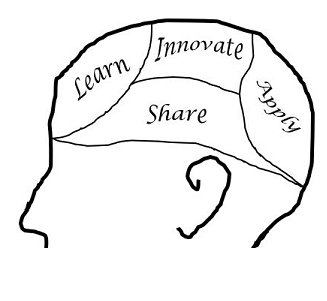
The expert level knowledge stewardship requirement is clear, but perhaps there is one step beyond even being an expert curator and steward of a subject or practice and that is to be the steward of the overall system and culture of knowledge: learning from experience, innovation, and sharing and applying the best knowledge.
* Skills framework for the information age: https://sfia-online.org
 AI4KM - Robert Taylor