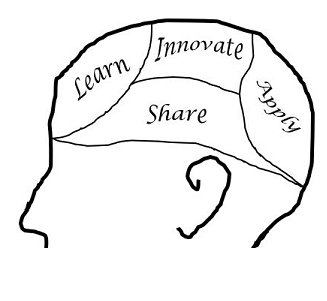
A colleague of mine from way back – a qualified library scientist – put it to me nicely years ago: The difference between the content side and the collaboration side of KM: “Shush, there’s no talking in the library”.
Indeed this did used to be a thing – not talking in the library – I mean the big building with books in. The culture of the library was that people needed quiet to read and contemplate ideas on their own, not discussion and debate nor other noisy distractions. Well, there’s a time and place for everything.
It’s Flow Friday again, as it is every Friday and has been for a year or more since a colleague proposed the idea quite succinctly. I don’t think I’ve ever seen anything catch on so quickly and easily. And the thing I mean is just the very simple idea that you have permission and it’s quite acceptable to reserve Fridays for head-down, progress-making work, without meetings and distractions, if you chose. And there you have it – caught on instantly.
Probably the groundwork was all there already. Working from home on Fridays was already a norm (I mean even way before Covid – you know this). Everyone knew they had lots of meetings and everyone wanted to collaborate with colleagues too, but they also had some difficult work that just needed time to really get deep into in order to get into the flow and get things done. From senior management all the way across to the newest intern everyone was ready for this. So it just needed someone to say “hey, let’s make it official”. And he had a snappy brand for it, Flow Friday.
This idea of ‘flow’ is well established. We all know from our own experience that there’s a (stopping, re-starting) cost that causes a loss of productivity when we have to constantly switch between one thing and another – such as when your calendar is full of an unbroken series of half-to-one-hour meetings. You never get that deep into anything. If you’re interrupted in your reading in the library by some disturbance or noise, then when you finally turn back to it there’s a “now, where was I?” moment. That’s when you most obviously feel the switching cost. Very often we need a decent amount of unbroken time, on our own, to really get deeply into the zone where the rest of the world fades out and you’re in the most receptive, creative state to engage with the ideas and possibilities.
 AI4KM - Robert Taylor