One sure sign that Knowledge Management isn’t embedded into the work is when it becomes an additional activity for ‘evenings and weekends’ – i.e. outside of the working day. Sadly, this is quite often the case.
Unfortunately, for many working people, many work tasks can fall into this category of ‘evenings and weekends’, not just KM. Making travel plans, filing expenses, completing timesheets, catching up on email, reading the company comms and actioning the many ‘to-dos’ they often ask for are typical examples. They’re often seen as administrative tasks that don’t really belong as part of any specific work process or project, so that when KM gets lumped in with them there’s a clear signal that it isn’t really part of the ‘proper work’. We notice that, typically, those with the power and position to do so usually appoint others around them to do these kinds of tasks for them – for instance making their travel arrangements and doing their expenses: They don’t think these tasks should be part of their overtime – which is a signal that is not lost on the staff in general.
The kinds of KM tasks that can fall into this odd bucket of elastic time that’s magically available to work are very wide and can include everything from the more clerical information/document management tasks, through to knowledge sharing, creating and curating knowledge resources, everything that falls under communities of practice and researching new ideas. It’s quite possible that a core KM process such as learning from experience/lessons learned might also lack any budgeted real-time provision and be left to be squeezed into the margins.
When marginalised and squeezed like this, the quality and consistency to which this work gets done depends on either the conscientiousness of the individuals (which shouldn’t be over-tested) or the hardness of management controls or social/cultural pressure (neither of which I’m advocating).
During my working life I’ve seen two competing ‘camps’ on this matter. One is the ‘hardy brigade’ who say things like “just get on with it” or “we all had to do it” and “it’s part of what’s expected”. The other camp is looking for relief from work so that a specific proportion of time can be allowed for these tasks – the time available ‘for work’ gets reduced so that some time is allowed for ‘non-work’. There’s some truth in each of these positions, and also flaws in both; and there’s a third way that is better.
To the hardy brigade I say, yes, sometimes it is like that, but the way that it works is that diligent people make their own decision whether and how much of their own discretionary time and attention to spend on what. People do contribute ‘above and beyond’ but that should be extra, and welcomed when provided, not expected, mandated or coerced.
To the camp looking for relief from work tasks I say, yes, there are good reasons not to spend 100%(+) of people’s time on the bare bones of their regular process/project roles because you always need slack time and contingency and, besides, there are other aspects of work that we do this for (training, for instance, typically has allocated to it a standard budgeted amount of time in the year). It may well be part of the answer for KM, but it is still signalling that the KM is separate from the work, and the KM is more likely to be thinly spread across the year than a discrete training event of a few days’ duration somewhere in the calendar.
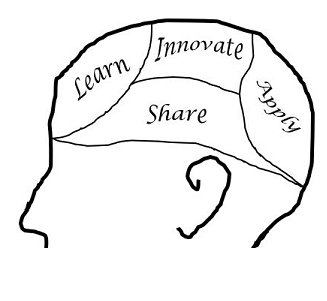
The third way I propose is to position the KM as an integral part of the work itself. When taking on any kind of work there should be the habit, as a standard, of checking for relevant expertise and prior art; lateral liaison and collaboration with informed and consulted subject matter experts should be a line in the workplan; lessons learned and matters arising are part of the ongoing project, periodically, and in the conclusion before the project can be finally closed and people released.
How can we get to this state of affairs? One way is to make sure that whatever standard processes and controls exist around project or process assurance (with all the supporting management structures under them) include KM standards that will equally be checked on alongside schedule, budget, team etc etc. There are hard or firm measures like this that we can put into the infrastructure. The other main avenue is the culture and behaviours avenue: role modelling the behaviour oneself and promoting other role model champions who do; intervening as the knowledge manager yourself to check up on project plans; telling the stories of success … and failure.
Amongst the failures are, first, the KM job just doesn’t get done or doesn’t get done in a quality way, risking or losing all the potential benefits. The cost of not learning from experience, for example, is no, slower or negative growth vs competitors – and the like.
The other major failure is burn out of employees. It’s an unsustainable way of working to continue to draw on natural resources, such as people, as if they were free of charge to the business and just ‘externalities’ we don’t need to account for. That is how the industrial world has treated nature – an endless source of resources that can just be plundered and taken from, and a place to dump waste. That is where the climate crisis, pollution, destruction of biodiversity and ruin of people’s lives is coming from. If we treat people in the same way, as if they had extra time and energy to provide to the machine that doesn’t need to be accommodated or accounted for, there will be a reckoning somewhere: something’s gotta give.
 AI4KM - Robert Taylor
One thought on “Evenings and weekends”